
Community Spotlight: Shining a light on Birmingham City University
Listening to Tomorrow’s Leaders: What Happens When Youth Lead the Conversation on Resilience?
By Abubaker Adam, Partnership Lead at VCS Emergencies Partnership
Last month’s National Consortium for Societal Resilience [UK+] Conference in Manchester put young people at the centre, giving them a meaningful space to speak and be heard. Their message to practitioners, policymakers, academics and community leaders was clear:
Listen to us - what works, what doesn’t, and what must change if youth resilience is to be genuinely embedded.
Their guidance on engaging youth communities was impactful and direct:
Don’t broadcast at us - we switch off when it feels like a lecture.
Let our peers speak to us - we connect better with people who understand our world.
Trust that we know our limits - we’re aware of what we can and can’t do.
We can do more than you think - but only if you give us the chance.
Throughout the day, youth speakers echoed something emergency planners have long recognised: communities and the voluntary and community sector (VCS) groups within them, including youth organisations, are the real first responders and the last to leave. Before blue lights arrive, it’s faith groups, local charities and volunteers who steady the situation. And long after emergency services withdraw, these same groups guide communities through recovery.
Youth Leading Climate Resilience: Lessons from Birmingham City University
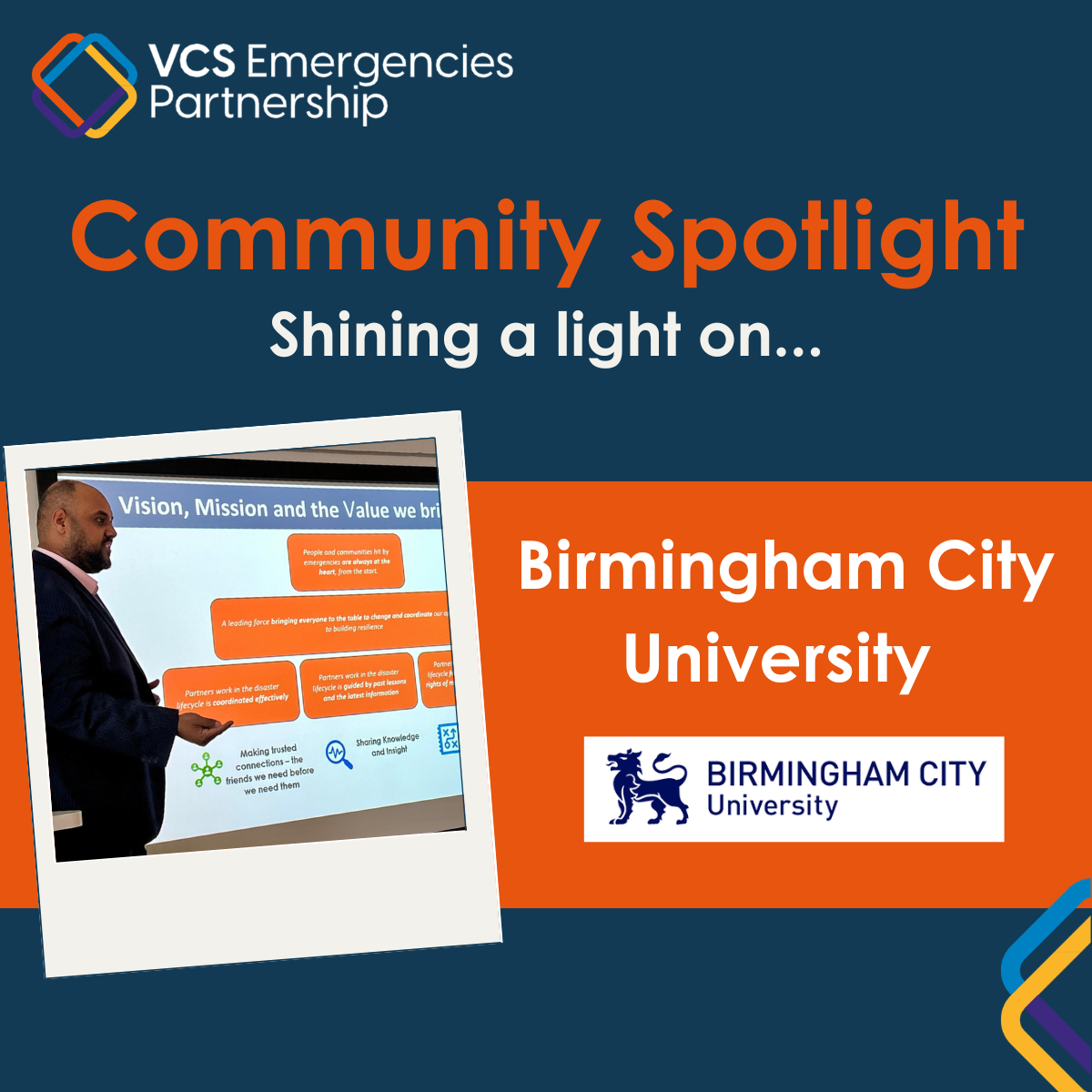
Just a week later, we saw this youth leadership in action. Through Footsteps, whose programme champions faith‑based climate action, we were connected to Birmingham City University’s School of Architecture to speak with their students. The focus was the climate emergency and the role of Emergency Hubs in Places of Worship across the West Midlands.
These students have been working directly across four sites: Mosques, Gurdwaras, Churches and Quaker spaces, grounding their ideas in real community needs. Early site visits helped them imagine how these buildings could evolve into hubs for climate adaptation and community resilience.
Our session supported them in moving from observation to shaping future possibilities - a crucial step in design thinking. Together, we explored how to:
Identify climate risks facing local communities
Map existing spaces and assets
Consider adaptation tools and community‑led solutions
It was a powerful reminder of how quickly young people step into leadership when given the space to do so.
The Assistant Professor then introduced a shared flooding scenario across all four Places of Worship. Hearing how students interpreted this challenge, through cultural, environmental and architectural perspectives, was both inspiring and deeply considered. My colleague Becky and I were fully engaged throughout; we were genuinely fascinated by the level of thinking and care these young leaders brought to their ideas.
We also shared our own experiences and perspectives, drawing on more than two decades of humanitarian and domestic response work. The result was a powerful moment of mutual learning, where academic thinking, community context and lived experience came together to shape a richer understanding of what climate resilience could look like in Places of Worship.
What does this mean for resilience?
The work unfolding in the West Midlands reinforces a wider truth: young people are not just the future; they are shaping resilience right now. Through design thinking, they’re helping Places of Worship prepare more confidently for climate impacts, and they’re driving new conversations that blend faith, environment and community action.
What I took away from both events:
We attended. We listened. We learned. And we will do more - especially alongside the future leaders already emerging in the resilience space.
We must hold to a simple principle: build with them, not for them. Because after hearing youth voices in Manchester and working with student designers in Birmingham, one thing is unmistakable:
When it comes to resilience, faith and the climate crisis, the world is already in safer hands than we think.
Real transformation always begins the same way: start small, start somewhere, and keep going. Progress grows first in communities that are ready, through trust built in shared training, shared action and shared purpose.
At the Emergencies Partnership our role is clear: to amplify, connect and strengthen what already works, not to redesign resilience from the top down, but to recognise and elevate it where it already lives.
Above all, these moments reminded us that societal resilience is never built by systems or structures alone. It is built by people - people who care, who refuse to look away, and who stand shoulder to shoulder long after the world has moved on.