Young Voices Shaping the Future of Resilience

12 minute read.
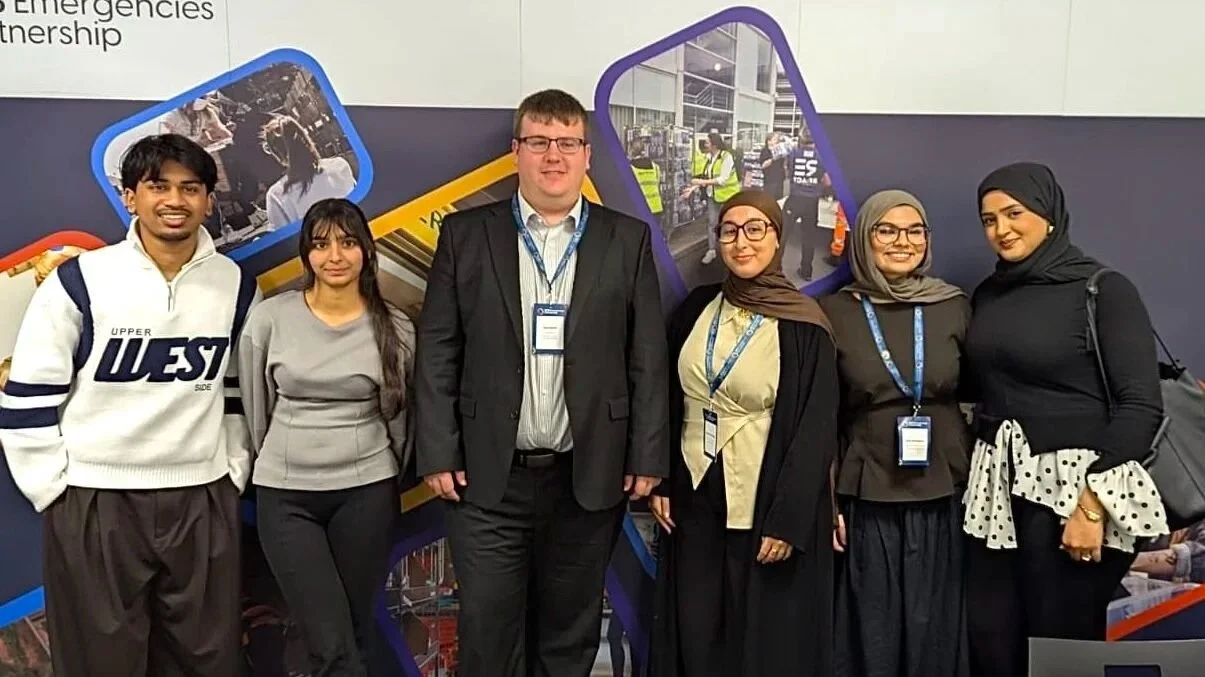
The Emergencies Partnership hosted its first in-person event, EP:LIVE, on 8 October, and one of the key themes running throughout the day was the importance of involving young people in conversations about risk, resilience and emergency preparedness.
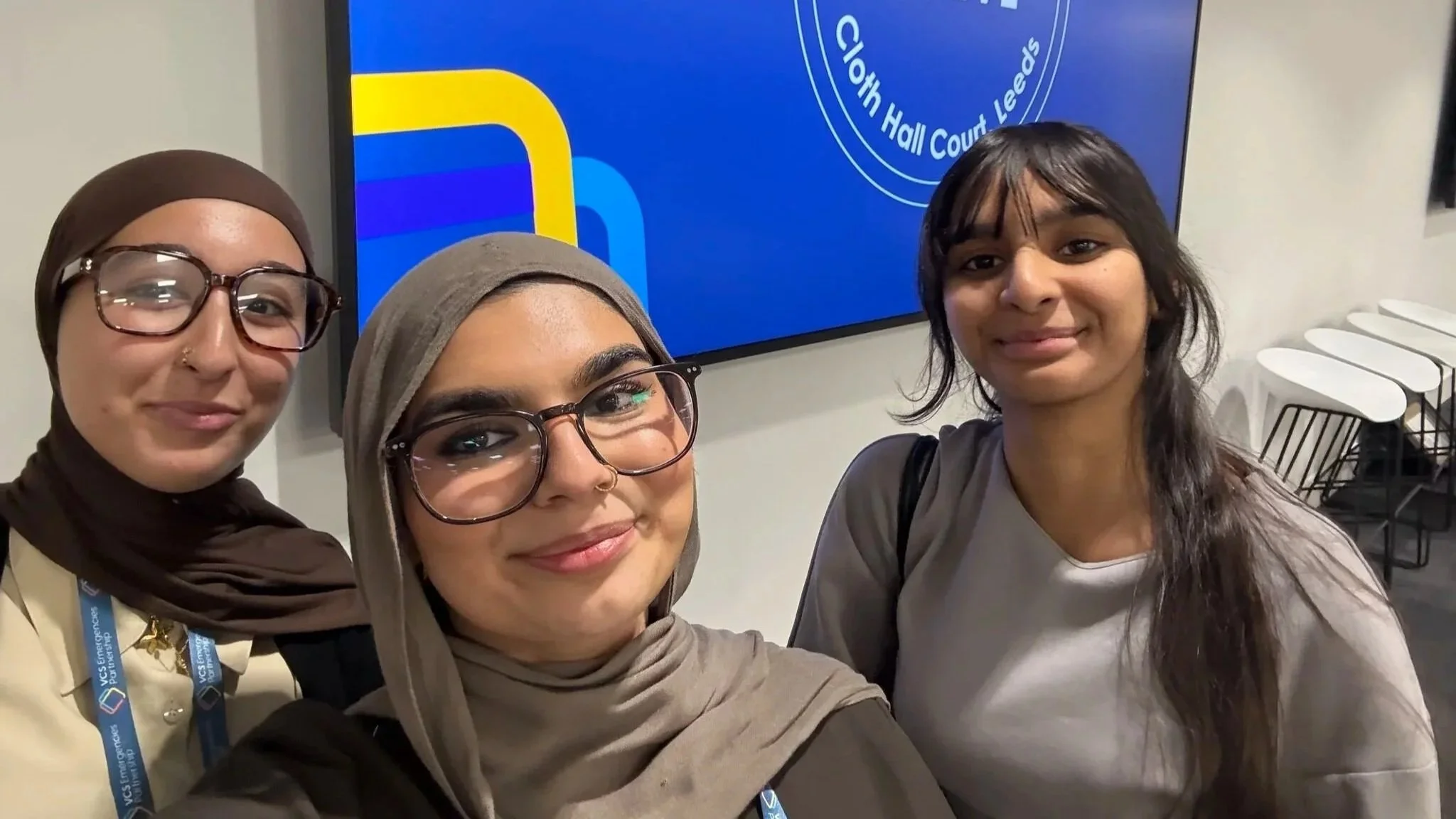
The newly formed EP Youth Council, established specifically for EP:LIVE, played an important role in shaping the programme and encouraging attendees to think differently about the future. One of its members is Basma El Hayani, a Youth Board Member at the Mayor's Fund for London.
Basma has four years' experience championing youth voice, social mobility, education, wellbeing and the future of young people in London. Through her role, she has worked with senior stakeholders including the Greater London Authority, Department for Education and London Funders, contributing to policy discussions, roundtables, youth summits and strategic projects.
To close EP:LIVE, Basma shared her reflections on the day's discussions. Drawing on conversations from across the event, she explored themes of relationships, belonging, meaningful participation and the actions needed to build more resilient communities. We are pleased to share her reflections below.
I'm Basma, and I'm a Youth Board Member at the Mayor's Fund for London. I'm part of the EP Youth Council and I’m also an International Politics and Sociology graduate.
My role throughout EP:LIVE was slightly different from some of the other Youth Council members. Rather than leading a particular session, I spent the day listening to the conversations happening across the rooms, the themes that kept coming up, the questions being raised, and perhaps, just as importantly, the things that weren't being said.
There was a lot of knowledge in the room. There were people who spent years working in emergency response, volunteering, community development, policy and resilience. There were people who had lived through emergencies themselves, and people who work with communities every day. So, the question for me wasn't necessarily whether we know enough. It was what we do with what we know.
What I heard
One of the strongest themes I heard throughout the day was the importance of relationships. Not just partnerships on paper. Not just knowing that another organisation exists. But actually knowing who to call, who to speak to, who communities already trust, and who can help information and insight move between communities and decision-makers.
You can't build those relationships when the emergency has already happened. Trust takes time, and understanding takes time. Sometimes the most important relationships are the ones that have been built long before anybody actually needs them.
That also linked to something else I heard throughout the day: having a seat at the table isn't necessarily enough.
Inviting voluntary organisations or community representatives into the room is one thing. But can they actually engage? Are they able to influence the conversation? Are people listening to what they're saying? And, perhaps most importantly, does anything change because they were there?
That came through really strongly in the conversations around young people too. We heard that adults sometimes assume they know what young people want. We hear young people, but we don't necessarily listen to them. Young people aren't one homogenous group. They experience different levels of income, housing insecurity, inequality, disability, opportunity and access. So, if we're always asking the same young people, with the same opportunities and the same access, we're not necessarily seeing the full picture.
I think one of the most important things I heard at EP:LIVE was that consultation can happen at the end, but meaningful involvement starts at the beginning. If you involve young people when you've already developed the policy, you're asking them to respond to something that already exists. It's like someone asking you whether you liked the floor plan when they've already built the house.
But if you involve people from the beginning, they might help you see the problem differently in the first place. That doesn't mean replacing institutional knowledge with young people's knowledge. It means adding another perspective. Because sometimes the person who hasn't spent years inside a system is exactly the person who can ask: “Why do you do it that way?”
Another theme that really stood out to me was belonging.
In the Bridging Divides podcast recordings, we heard that division isn't always something huge or obvious. Sometimes it's someone feeling isolated. Sometimes it's someone feeling like they don't belong. Belonging is about being seen and being heard.
I really liked the idea that communities don't have to agree on everything to belong together. There was a brilliant example from Bradford of Muslim and Jewish communities coming together around a shared local issue, which then developed into a relationship that has lasted for decades. They found common ground.
The bigger picture
When you put some of those conversations together, I think there is a bigger question sitting underneath a lot of what we've discussed at EP:LIVE.
We talk about resilience at an organisational level. We have risk registers, emergency plans, warning systems, communications strategies, response structures and trained professionals. All of those things matter. But resilience is ultimately experienced by people. It's experienced by the person receiving the warning, by the community trying to understand what is happening, by the person who needs to know who they can trust, and by the communities living with the consequences long after an emergency has stopped being the headline.
Emergencies also have a way of exposing the inequalities that already exist. They show us where the cracks are. So, I think one of the questions we should continue asking is:
Are the systems we build to prepare for emergencies reflecting the way risk is actually experienced by the people and communities we're trying to protect?
I think that also means recognising that what worked for one emergency or one community isn't necessarily something we can simply copy and paste into the next. We have to learn from what has happened, but we also have to adapt.
Communities are different. Risks change. And the next generation will experience risks that we might not even recognise yet. So perhaps resilience is not about finding one perfect model. It's about building systems that are capable of listening, learning and adapting. I’ll leave you with the two questions I left the audience with:
Question one
What are you going to do with what you've learnt at EP:LIVE?
Not just what have you learnt. Not what was interesting. Not what you're going to tell your colleagues about tomorrow.
What are you actually going to do differently?
Because if we spend a whole day sharing learning, challenging assumptions and hearing different perspectives, I think we should be able to point to something that changes because of it.
Question two
We've experienced some incredibly significant emergencies and crises over the last ten years. Grenfell. The Manchester Arena attack. COVID-19. And many others.
We've generated inquiries, reports, research, learning and recommendations. So the question isn't whether we've identified lessons. The question is:
Which lessons are still sitting there waiting to be turned into action? And if we're still having the same conversations ten years from now, what will we wish we'd done differently today?
Closing
I think it's very easy at an event like this to feel like we need to leave with all the answers. Although if you did manage to find all the answers, do let me know. But maybe that's not the point.
Maybe the point is to leave with better questions. To know what we're questioning. To know who we're asking. To know whose voice needs to be part of that conversation. And then, importantly, to actually do something with what we hear.
Because resilience isn't built when the emergency happens. It's built in the relationships, decisions and choices we make before it does.