
Heatwaves, Homelessness and Pets: Why We Need a More Inclusive Approach
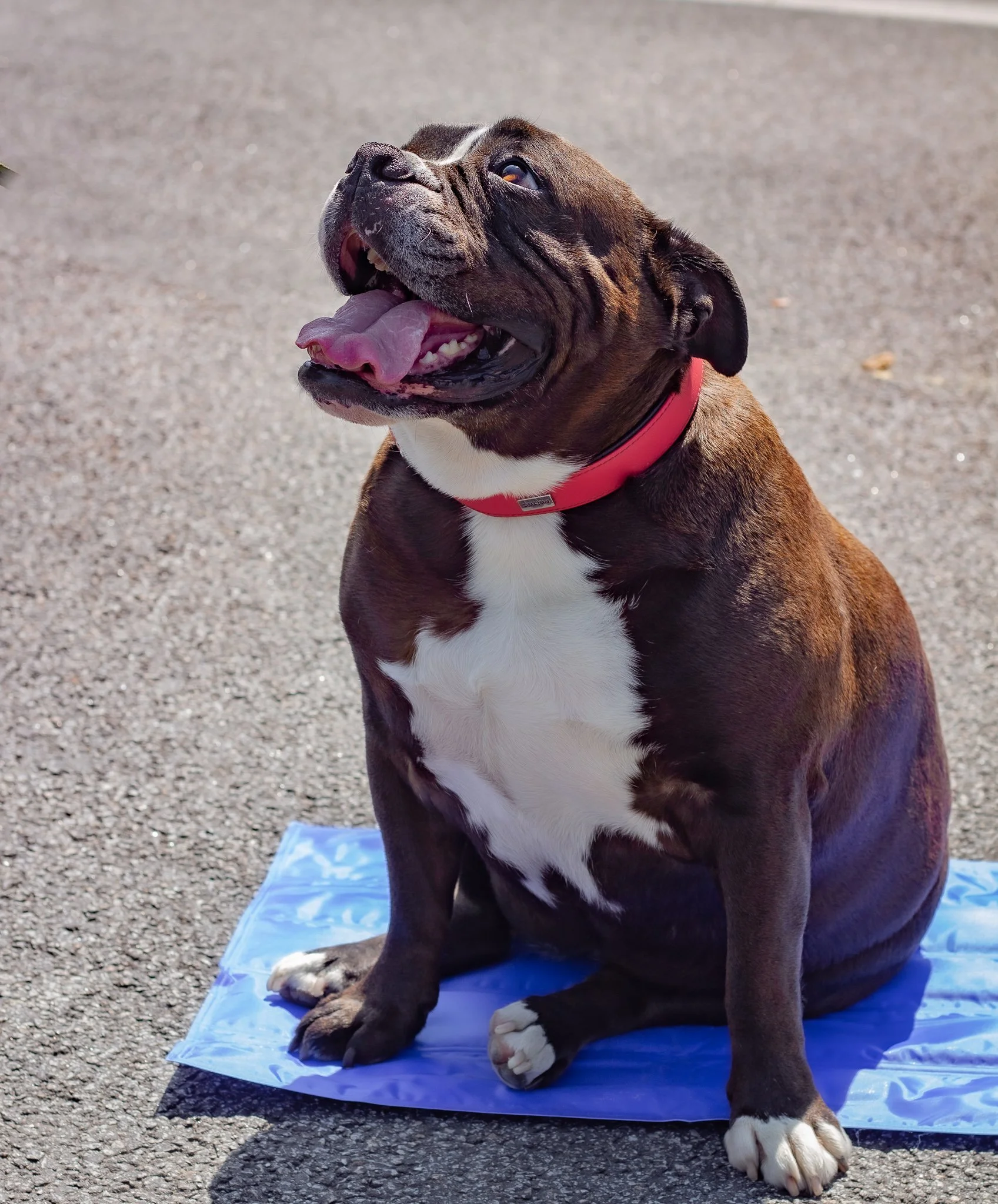
Image Credit: StreetVet
5 minute read.
A blog by Becky Maynard, our Partnership Lead.
As the UK faces increasingly frequent and intense heatwaves, much of the public conversation focuses on keeping ourselves safe. But what happens when you are experiencing homelessness and are responsible for the wellbeing of a beloved pet?
As part of my work with the VCS Emergencies Partnership (EP), I wanted to explore how extreme heat affects some of the people most at risk to its impacts. To do that, I spoke with Ros Incledon-Webber from StreetVet, the national charity providing free veterinary care to pets belonging to those experiencing homelessness.
Having previously supported StreetVet in its early days, it was a particular pleasure to reconnect and hear how the organisation is navigating the challenges posed by extreme weather.
The hidden challenge of keeping pets safe in extreme heat
StreetVet operates across the UK through volunteer-delivered outreach clinics, providing frontline veterinary care and access to treatment for pets whose owners might otherwise struggle to access services.
For Ros, one of the biggest concerns during recent heatwaves has been the cumulative effect of prolonged high temperatures.
"The last heatwave was prolonged. In many places it didn't cool down at night, so there was really no respite. It just kept getting hotter and hotter because there was no cooling down at night."
While everyone feels the effects of extreme heat, people experiencing homelessness often have far fewer options to escape it.
"Those experiencing homelessness will be subject to the same problems that everyone else has, but they have less means or less strategies or capabilities to be able to mitigate the situation."
Whether sleeping rough, living in a vehicle, or staying in temporary accommodation, finding somewhere genuinely cool can be incredibly difficult. In some cases, accommodation may be so hot that people are forced back outside, where temperatures are even higher.
When pets become another barrier
One issue that struck me during our conversation was how often pets unintentionally become a barrier to accessing support.
Many local authorities and organisations are now offering "cool spaces" during periods of extreme heat, similar to the warm spaces initiatives we've seen in winter. However, these spaces are not always pet-inclusive.
Ros was clear about the impact this can have:
"Having a pet is often a barrier to accessing accommodation and other homelessness support services, and it may well be a barrier to accessing a cool space too."
The inconsistency between areas can be particularly frustrating. Ros shared the story of one woman living in her vehicle with her dog because her local authority would not accommodate pets, while a neighbouring borough took a far more flexible approach.
What stood out most was where her concern lay.
"She was saying it's really hot... and she said, 'I really worry about Bella.' And I asked, 'Well, what about you?' And then she said, 'Oh, I'm more worried about my dog.'"
Anyone who works with pet owners experiencing homelessness will recognise this immediately. The bond between people and their animals is often extraordinarily strong, and many will put their pet's welfare ahead of their own.
What would a pet-inclusive heatwave response look like?
As emergency planners, voluntary organisations and local authorities continue adapting to more frequent severe weather events, there is a need to think more carefully about pets within resilience planning.
When I asked Ros what a truly inclusive approach would look like, her answer was refreshingly simple.
"It would be great if there was no exclusion... that pets were welcome without barriers."
Pet-inclusive cool spaces, emergency accommodation that accepts animals, and consistent policies across local authority boundaries could make a significant difference during future heatwaves. For many individuals, accessing shelter is simply not an option if it means being separated from their pet.
Adapting to a changing climate
Like many charities, StreetVet is finding itself responding to challenges that were barely being discussed a few years ago.
"A few years ago we wouldn't really have considered this."
Ros believes climate change means organisations will increasingly need to prepare for more sustained periods of extreme weather.
"I think it's something we will need to be prepared for."
During recent heatwaves, StreetVet teams adapted in real time, postponing outreach when temperatures became unsafe and advising clients not to travel. But Ros acknowledges that future planning will need to become more proactive.
"Having a strategy and a plan for next summer... how are we going to cope with these periods of prolonged heat or extreme heat?"
The impacts are not limited to clients. Volunteers may also be affected, whether through heat-related risks, caring responsibilities, or school closures triggered by extreme weather, as well as the small StreetVet staff team who all work fully remotely from home, not in an air conditioned officeThese secondary impacts can affect service delivery across the voluntary sector.
Practical support matters
One encouraging theme from our discussion was the importance of practical preparation.
StreetVet has already received requests from hostels and pet owners seeking advice on keeping animals cool during hot weather. Cooling mats and other simple interventions can help, but they need to be available before a heatwave hits rather than after it has already begun.
As Ros noted:
"We need to provide that in advance because it might take us a week to send out cooling aids."
For organisations supporting at riskpopulations, forward planning increasingly matters just as much as emergency response.
Ros' five golden rules for keeping pets safe in hot weather
To finish, I asked Ros for her key advice for all pet owners, regardless of whether they are experiencing homelessness.
Her guidance was straightforward:
Stay out of the heat and direct sun where possible.
Walk dogs very early in the morning or after sundown.
Avoid strenuous activity.
Ensure constant access to fresh water.
Find somewhere cool and allow pets to rest.
Perhaps my favourite comment from the conversation was this:
"No dog died from missing a walk."
In other words, when temperatures soar, doing less can sometimes be the safest option.
Looking ahead
Heatwaves are no longer unusual events. For emergency planners, local authorities, charities and community organisations, the challenge is ensuring that nobody is excluded from support when temperatures rise - including those whose pets are their closest companions.
Conversations like this remind us that resilience planning is rarely just about infrastructure or procedures. It's about understanding the realities people face and designing responses that work for the whole household, pets included.
If you'd like to support StreetVet's work helping pets belonging to those experiencing homelessness, consider taking a look at their Amazon Wishlists, where practical items such as cooling mats can make a real difference during periods of extreme heat.
To learn more about StreetVet and the vital work they do please visit their website.